




New from Tracr

Overview: Tracr™ is the world’s leading digital platform for tracing natural diamonds from source at scale, bringing you the ability to explore the provenance, authenticity and the unique journey your diamond has taken along the diamond value chain.
Our mission: Tracr’s mission is to establish a foundational platform that enhances the diamond industry’s ability to build desire and confidence in natural diamonds by creating an industry-wide provenance standard to share a diamond’s story from source to client.
Tracr strives to enable an ecosystem for participants to foster value-enhancing innovation through data sharing, information exchange, and verification across the platform.
How does Tracr differ compared to other solutions:
- Seamless Integration
Tracr integrates with widely accepted technologies to simplify the lives of our customers. - Traceability at Source
Tracr is the only platform that starts from the mine, ensuring transparency from the source. - Objective Verification
Unlike other solutions that rely on self-declaration, Tracr conducts objective verification of individual diamonds. - Extensive Ecosystem
Tracr is working with many of the largest industry players to ensure traceability at scale
Key Standards in Place: When you buy a diamond with a Tracr ID, you are purchasing from an approved producer in a non-sanctioned country. These stones are individually registered at the source. The diamond is then manufactured by an RJC or BPP certified manufacturer and adheres to the Pipeline Integrity or the Tracr Data Validation Standard. This information is recorded on the blockchain, ensuring a tamper-proof, immutable record.
Learn more and become a Tracr Member HERE

Increasing Sales with Compelling Story Telling & Providing Proof to Elevate Trust

The Plumb Club Industry & Market Insights from 2025 illustrated a significant uptick in consumer awareness and desire for clarity and understanding of responsible business practices and traceability in the jewelry category. From ethical sourcing to traceability, the increase in importance to the consumer rose 7% and 8% respectively over a similar survey only 2 years earlier. In addition, more consumers were willing to pay significantly extra for products that ensured these characteristics. Additionally, fewer consumers said that they would make the purchase without verification.
The Plumb Club Podcasts focus on educating customers on the natural diamond story, as well as the tools that can provide traceability proof when making a sale, thereby meeting this rising consumer expectation. The following podcast from Tracr is now posted:
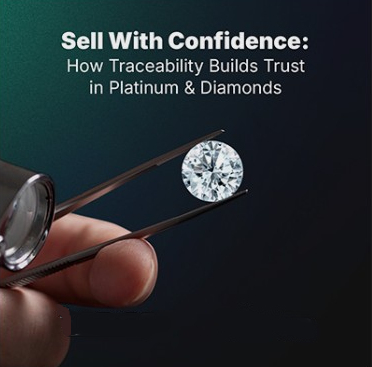
Sell With Confidence: How Traceability Builds Trust in Platinum and Diamonds: From mine to market, provenance has become the new luxury! In this podcast, presented by Tracr, Josh Helmich of Helmich Luxury Group speaks to Wesley Tucker and Emanuela Morando of Tracr, and Fahmida Smith of Valterra Platinum Ltd., about how traceability and digital-product passports are reshaping diamonds and platinum in the retail space. Listeners will learn how giving their customers proof, not promises, elevates product value and provides trust, and therefore, a higher purchase potential.
For access to this podcast and more, please click here.
Learn more and become a Tracr Member HERE
Balancing Legacy and Innovation: A Conversation with Nisarg Mehta of Robbins Brothers
We spoke with Nisarg Mehta, Director at Robbins Brothers, the 100+ year-old jeweler known for its heritage and customer-first approach. As consumer values continue to evolve, Nisarg shared how the company is adapting its diamond strategy, embracing traceability, and preparing for a more transparent future.
Q: How is Robbins Brothers evolving its strategy around natural vs. lab-grown diamonds? Natural diamonds have always been part of our foundation. They carry a sense of permanence and emotional depth that customers strongly connect with. But we also saw early on that lab-grown diamonds had a place in the market and introduced them to meet the needs of a broader customer base.
As the lab-grown segment grows and prices continue to fall, we’re being more intentional about how we present both categories. Natural diamonds continue to be the preferred choice for milestone moments and heirloom-quality pieces. Lab-grown diamonds tend to appeal to customers looking for a larger look at a lower price, or for fashion-focused and self-purchase occasions.
Our focus is on education and clarity. We want customers to understand both the pricing and long-term value differences. We’re training our teams and updating our messaging to help people feel informed and confident, rather than overwhelmed by options. The right diamond should match the meaning of the moment.
Q: How has customer interest in ethical sourcing and traceability changed? Over the past decade, we’ve seen a significant shift in how customers — especially younger generations — approach diamond buying. It’s no longer just about the 4Cs. There’s a fifth C now: conscience. People want to know where their diamond comes from, how it was sourced, and whether it aligns with their values. Provenance, ethical sourcing, and environmental impact are becoming key parts of the purchase conversation — particularly among Millennial and Gen Z shoppers.
We’ve always taken sourcing seriously, working with suppliers aligned with responsible practices. That includes support for the Kimberley Process, working with mines that invest in local communities, and ethical producers of lab-grown diamonds.
More recently, we’re seeing a stronger demand for verified traceability. People want to move beyond verbal assurances and see objective proof. Tools like blockchain-backed platforms and third-party certifications are gaining interest because they provide that added level of transparency.
We view this as a positive evolution. It pushes the entire industry forward and aligns with our long-term vision: to sell diamonds that people feel proud to wear — not just because they’re beautiful, but because they reflect a deeper integrity. As a younger leader in a heritage-driven business, I see my role as bridging generations — honoring the legacy of what diamonds have always represented, while championing the values that matter most to today’s customer. That’s why we’re actively exploring ways to integrate verified traceability tools into our supply chain, so every diamond comes with confidence and clarity, both emotionally and ethically.
Q: Does traceability impact customer buying decisions? It definitely can. For some customers, it’s a deciding factor. For others, it adds emotional value.
One example that stands out was a customer looking to upgrade his wife’s diamond for their anniversary. I showed him a stone with full traceability, including its origin and even an image of the original rough. He was completely captivated — not just by the stone itself, but by the entire journey it had taken. From forming over billions of years deep in the earth, to being discovered in Africa, shipped to India for cutting and polishing, and finally arriving here at Robbins Brothers. it gave the diamond a sense of life and purpose. What began as a simple upgrade suddenly became something much more meaningful. The story behind the diamond added a layer of romance that he hadn’t expected — it wasn’t just a gift anymore, it was a symbol of history, transformation, and intention.
More broadly, even when customers don’t initially ask about traceability, we’ve found that they respond very positively when we introduce it. It builds trust, adds emotional value, and turns the diamond into more than a product — it becomes a story they feel proud to share.
Q: Do you see traceability becoming standard across the industry? Yes. As consumer expectations grow and technology improves, traceability will become a standard feature. People want clarity about where their diamond came from and how it got to them.
At the same time, it’s important to understand the complexity of the trade. Many beautiful, ethically sourced diamonds don’t have digital records, especially older or vintage stones. We still fully stand behind those pieces.
We’re preparing for both scenarios. We’re working to expand traceable inventory while continuing to educate customers and our teams on the broader context and value of each diamond we offer.
Q: What role will Robbins Brothers play in the future of the industry? We’ve built our brand around love, trust, and life’s most meaningful moments. Our role now is to carry those values forward while adapting to what today’s customers care about.
We were early to introduce lab-grown diamonds, not to follow a trend, but to offer more choice. That same forward-thinking approach is guiding us as we focus more on traceability, education, and storytelling.
We’re not just selling diamonds. We’re helping people celebrate milestones with confidence and pride. With over a century of experience and a continued focus on innovation, we’re committed to helping lead the industry forward.
Learn more and become a Tracr Member HERE
The Clear Cut on Transparency, Trust, and the Future of Traceable Diamonds
Jewelry retailers Olivia Landau, Founder and CEO of The Clear Cut, and Kyle Simon, Founder and COO, share how traceability is shaping the future of fine jewelry when dealing with consumers. Known for their education-first, digitally native approach, The Clear Cut helps consumers connect more deeply with their pieces by making transparency part of the story. In this conversation, they explore how traceability reflects their retail brand’s values, how consumer interest has evolved, and why verified origin is seen as the next frontier in luxury.
What does traceability mean to The Clear Cut, and how does it play within your values and the context of fine jewelry? At The Clear Cut, traceability isn’t just a feature it’s a reflection of our core values: education, transparency, and trust. As a digitally native brand, we’ve always believed our clients deserve to know exactly what they’re buying, where it came from, and who it impacts. Traceability allows us to bring the often opaque world of fine jewelry into the light, helping our customers feel confident that their most meaningful pieces align with their values. As a natural diamond industry, we have done a poor job of sharing the incredible story of natural diamonds. Tools like Tracr enable us to share these stories in a new compelling way.
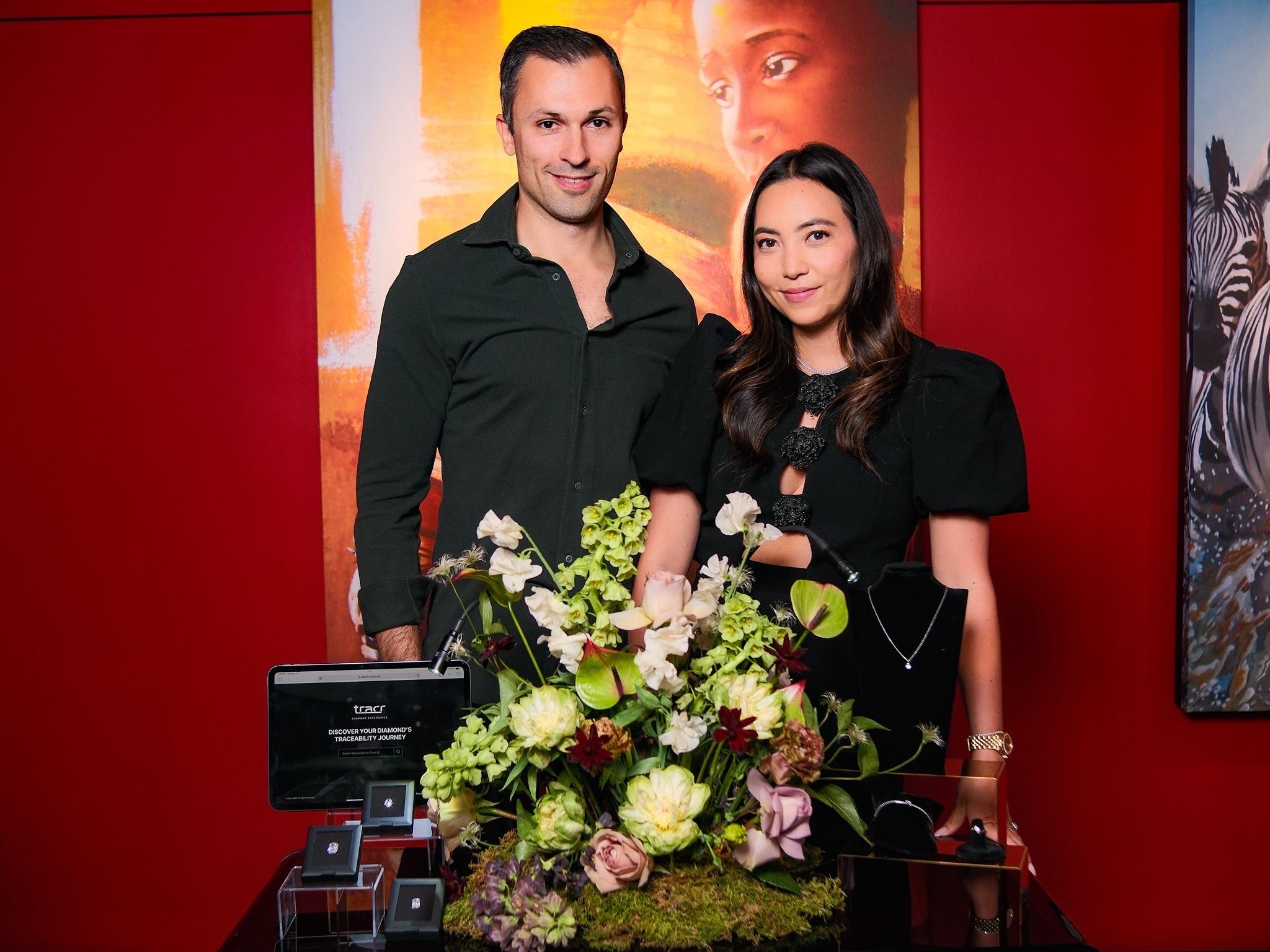
Kyle Simon and Olivia Landau
Are customers asking about diamond origin, or is it something you educate them on? Has this changed over time? Early on, most clients didn’t know to ask. That’s where our role as educators came in. We’ve always made it a priority to guide clients through the diamond journey from mine to finger. Over the years, especially with growing interest in ethical sourcing and sustainability, we’ve seen a significant shift: customers are now asking the right questions. Origin, impact, and authenticity have become top of mind, especially among younger buyers. We expect this behavior to only continue moving forward.
Has traceability influenced any of your collections? Absolutely. We’ve built special capsule collections around traceable stones. These collections allow us to tell a deeper story not just about beauty and design, but about provenance, people, and positive impact. It’s a powerful way to connect our clients emotionally to the full journey of their jewelry. Our Tracr collection has been a huge success and has really resonated with our community.
Does having traceable items affect consumer perspective on non-traceable pieces? While not every diamond in the market is currently traceable, we’re seeing growing interest in transparency and a willingness to prioritize origin when it’s available. Our goal is to bridge that gap over time. Traceability is not every client’s top priority however clients do feel more comfortable knowing that it is an option for them. We believe that there is a halo effect for brands that offer traceable diamonds. Offering traceable goods does not negatively impact the non-traceable pieces.
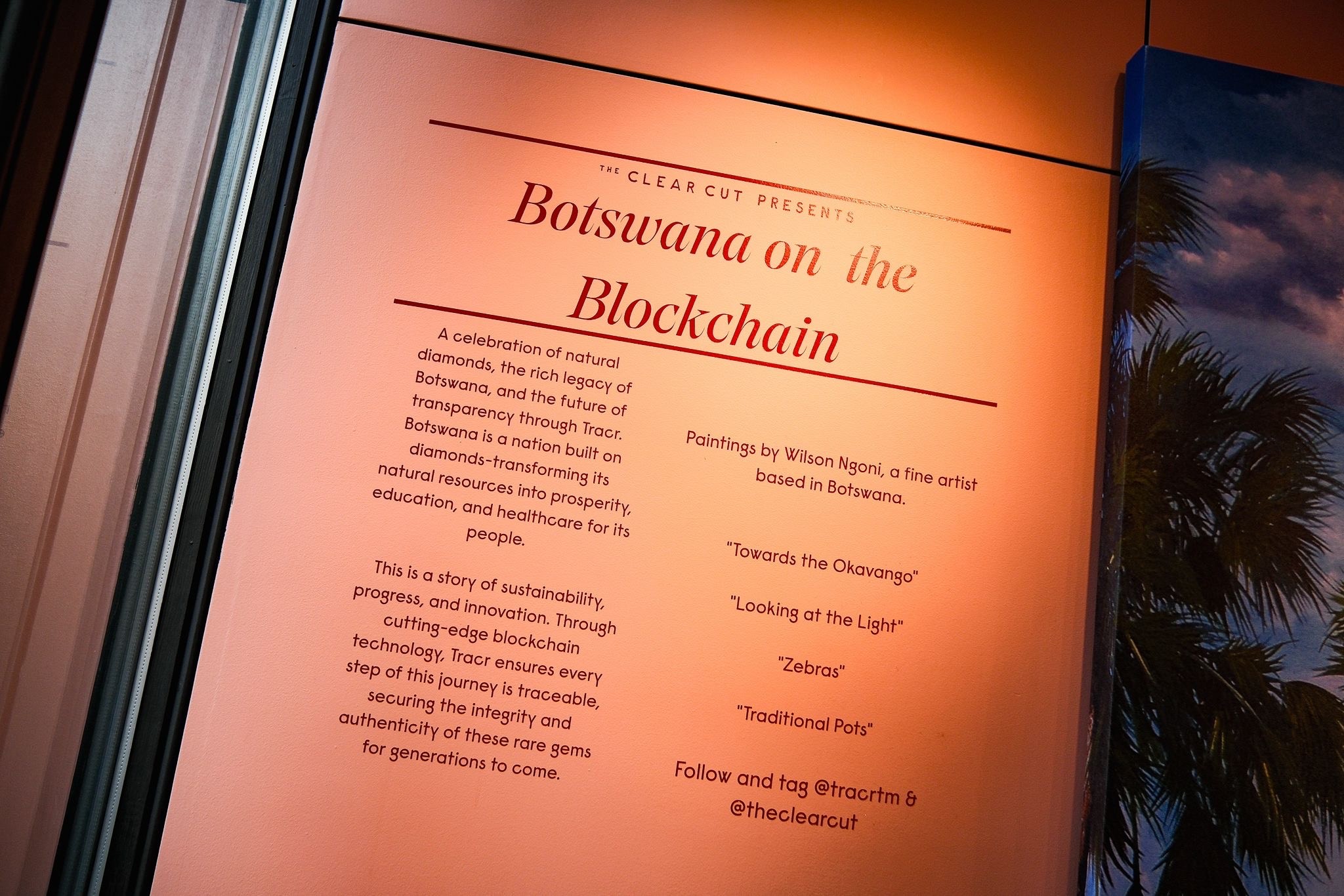
You have a strong presence on social media – do you find any increased engagement when talking about traceability or transparency? Yes, without question. Our audience is hungry for real information, not just marketing fluff. Content that demystifies the supply chain, showcases partnerships with Botswana or Tracr, or spotlights sustainable practices always sparks high engagement. People want to buy something beautiful and meaningful and we’re giving them the knowledge to do that confidently.
Where do you see the future of traceability in the jewelry industry heading and what role will The Clear Cut play in that evolution? Traceability will become table stakes for the next generation of luxury. As technology improves and demand for ethical sourcing grows, brands that can offer verified, transparent supply chains will stand apart. The Clear Cut is proud to be at the forefront of this shift leveraging innovation, education, and our close partnerships to set a new standard. We see ourselves not just as participants, but as leaders shaping a more accountable and informed future for fine jewelry.
Learn more and become a Tracr Member HERE
How the Diamond Industry is Embracing Ethics and Innovation

The diamond industry has long been associated with beauty, rarity, and timeless value, but today, it’s increasingly synonymous with transparency, responsibility, and innovation. Across the industry, businesses and organizations are working together to modernize practices, enhance consumer trust, and ensure that every diamond’s journey reflects the ethical and environmental standards.
From advanced traceability technologies to globally recognized memberships, the modern diamond supply chain is evolving quickly and purposefully. Here are just three of many initiatives helping to shape a more responsible and future-ready industry: the Responsible Jewelry Council (RJC), Tracr, a pioneering blockchain-based traceability platform and CIBJO’s Blue Book standards.
Responsible Jewelry Council (RJC): A Global Benchmark for Responsible Practices
The Responsible Jewelry Council is a leading standards-setting organization dedicated to promoting responsible business practices throughout the jewelry and watch industry. Its robust certification system covers everything from ethical sourcing and labor practices to environmental stewardship and supply chain due diligence.
With over 1,600 member companies spanning the entire value chain, including miners, manufacturers, and retailers, RJC certification has become an important mark of integrity and professionalism. Notably, the RJC is not just for large enterprises; it welcomes and certifies companies of all sizes, including small and mid-sized businesses. This inclusivity has contributed to its rapid growth, as more organizations recognize the value of aligning with global standards and building consumer trust.
RJC certification also serves as a key access point to other initiatives within the industry: for example, RJC membership is a requirement for participation in Tracr and Plumb club members, demonstrating how different innovations are being designed to reinforce and complement each other.
Tracr: Cutting-Edge Traceability Through Blockchain
Tracr is a breakthrough platform that uses blockchain technology to provide secure, verifiable traceability for natural diamonds. Tracr allows each diamond to be individually digitally tracked from its origin all the way to its polished form.
This innovation brings unprecedented transparency to the supply chain – with data points recorded at every stage, from rough to polished. Tracr also incorporates blockchain and advanced data analytics to ensure accuracy, reliability and an immutable record.
Importantly, Tracr is integrated with the GIA for seamless data sharing and verification, with plans to expand integration to other leading laboratories in the future. Participation isn’t limited to De Beers only; producers such as the Okavango Diamond Company and Mountain Province are also onboarded, further broadening the platforms reach and inclusivity. Tracr participants are RJC members, reinforcing the importance of shared ethical standards across platforms.
CIBJO and the Blue Book: Building Consumer Confidence Through Global Standards
CIBJO, the World Jewelry Confederation, supports the industry through its internationally respected Blue Book – a set of harmonized guidelines that define terminology, grading, and disclosure standards for diamonds, gemstones, and precious metals.
These standards help ensure clarity, consistency, and fairness across the global jewelry trade. They are widely adopted by professionals and institutions alike, fostering trust between industry players and consumers. By encouraging accurate representation and ethical communication, the Blue Book helps ensure that jewelry buyers can make informed, confident decisions.
A Collaborative Path Toward a Responsible Future
These are just three examples of how the diamond industry is modernising and aligning with the values of today’s consumers – embracing technology, strengthening standards, and working collaboratively to build a more sustainable and ethical future.
From mine to market, a growing network of initiatives is ensuring that diamonds reflect not only beauty and craftsmanship, but also responsibility, innovation, and trust. As the industry continues to evolve, the commitment to transparency and ethical excellence is proving just as enduring as the stones themselves.
Learn more and become a Tracr Member HERE
TRUE TRACEABILITY VS. SELF-DECLARATION: WHY VERIFICATION MATTERS
In an industry built on rarity and value, the diamond trade has long struggled with one persistent challenge – proving provenance. As consumer demand for ethical sourcing and transparency grows, the difference between true traceability and self-declaration becomes critical.
Self-Declaration: A Flawed Model: Self-declaration relies on the word of suppliers to confirm a diamond’s journey from mine to market. While this method might appear straightforward, it’s riddled with potential pitfalls. Without independent, objective verification, essentially anything can be declared about a diamond’s origin or ethical credentials, leaving the system open to manipulation and misinformation.
This lack of accountability not only threatens consumer confidence but also undermines the efforts of companies genuinely committed to responsible sourcing.
True Traceability: Technology-Driven Proof: True traceability, by contrast, depends on verifiable, immutable data – ideally captured at every stage of a diamond’s lifecycle. This is where companies like Tracr and Sarine are revolutionizing the industry.
Tracr, leverages blockchain technology to create a secure, tamper-proof digital record for each diamond. Combined with physical data such as 3D scans and unique identifying features, Tracr tracks each stone back to its source with verifiable data.
Similarly, Sarine offers advanced scanning and imaging technologies that can digitally map each rough diamond before it is cut. These scans can be used to track the diamond throughout the polishing process, ensuring continuity and verification across stages.
Collaboration in Action: Sarine x Tracr: In a landmark example of industry collaboration, Tracr and Sarine have integrated their technologies to enhance end-to-end traceability. By combining Tracr’s blockchain infrastructure and scaled scanning at the source with Sarine’s imaging and data capture, they offer robust, scalable, verified, and cost-effective diamond traceability solutions. This collaboration not only strengthens individual efforts but also sets a powerful precedent for how the industry can come together to provide consumers with the trust and transparency they increasingly demand. This marks just the start, with more collaborations to come that will keep making the industry more resilient and transparent.
Why It Matters: True traceability empowers consumers to make informed purchases. It protects brands from reputational risk, enables compliance with regulatory standards, and helps ensure that the diamond trade supports mining communities.
Ultimately, the distinction is clear: self-declaration is not traceability. True traceability requires objective, verifiable data.
Learn more and become a Tracr Member HERE
The Evolution of Diamond Traceability: From Paper Trails to Blockchain Technology
For centuries, diamonds have been symbols of luxury, beauty, and enduring value. However, their journey from mine to market has often been unclear. Over time, the diamond industry has made significant strides in ensuring traceability and transparency, culminating in the development of platforms like Tracr, the world’s leading digital platform for tracing natural diamonds from source at scale.
In the early days of the diamond trade, tracing a diamond’s journey relied on manual record-keeping. Transactions were often recorded on paper or informal agreements, making it difficult to verify the true origin of a stone.
The global diamond industry took a major step toward traceability in 2003 with the introduction of the Kimberley Process. Established by governments and industry stakeholders, the Kimberley Process aimed to prevent conflict diamonds from entering the legitimate market. Under this system, participating countries agreed to certify diamond shipments as conflict-free, ensuring that only ethically sourced diamonds reached consumers.
While the Kimberley Process was a landmark achievement, the certification process relies on government oversight and paper-based documentation. Additionally, it focuses on rough diamonds, offering little visibility once diamonds are cut, polished, and sold downstream.
Recognizing the need for greater transparency, diamond industry leaders introduced further initiatives. The Responsible Jewellery Council (RJC) set industry standards for ethical sourcing and sustainability, while companies like De Beers pioneered programs such as Forevermark, which assigned unique inscriptions to diamonds to verify their authenticity and origin.
Despite these advancements, traceability systems remained fragmented, with different companies using their own methods. A universal, tamper-proof solution was needed to track diamonds seamlessly from mine to market and to help differentiate natural diamonds from lab-grown alternatives, an increasingly vital distinction in today’s industry.
In response to the growing need and shift in consumer mindsets, Tracr was launched in 2018. Tracr enables registered diamonds to be assigned a unique ID based on their physical characteristics and provenance data. Once registered on the blockchain, this information remains immutable, providing a permanent and verifiable record of the diamond’s journey. Tracr also leverages existing industry standards such as the Responsible Jewellery Council (RJC), De Beers’ Best Practice Principles (BPP), and Pipeline Integrity (PI) to ensure compliance with ethical and sustainability benchmarks. Furthermore, Tracr is designed to be technology-agnostic, allowing for seamless integration with existing systems and enabling broader industry adoption at scale.
Tracr has grown into the diamond industry’s leading traceability solution, offering scalability, security, and transparency. Unlike previous systems, Tracr extends beyond rough diamonds to track polished stones and ensure full end-to-end visibility. It provides confidence to consumers, retailers, and wholesalers, strengthening trust in the global diamond supply chain. A key focus of Tracr is enhancing the narrative around natural diamonds – an essential factor in retail and for the countries where these diamonds are mined. While diamonds mark the beginning of this journey.
Diamond mining itself plays a significant role in economic development, particularly in regions where it provides employment, infrastructure, and community investments. Leading mining companies continue to drive positive change, ensuring that the benefits of the diamond trade extend beyond financial profits to real societal impact.
As traceability becomes an expectation rather than a luxury, it is crucial for consumers to research and ensure that their chosen traceability solutions are not just self-declarations but verified, secure systems. Platforms like Tracr set a high standard, ensuring that the information provided is backed by immutable data rather than claims that cannot be substantiated.
By being tech-agnostic, Tracr ensures that it can integrate with various systems across the industry, allowing stakeholders to adopt traceability without overhauling existing infrastructure. This flexibility enhances scalability and fosters widespread industry participation, positioning Tracr as a future-proof solution for diamond traceability. The technology behind Tracr holds the potential to expand beyond gemstones to other products, such as metals, paving the way for broader applications in responsible sourcing.
The journey toward diamond traceability has been a long and complex one, from paper records to blockchain-powered solutions like Tracr. While challenges remain, the evolution of traceability technologies has brought new levels of trust to the diamond industry. By integrating with established ethical frameworks such as the RJC, BPP, and PI, and remaining tech-agnostic, Tracr enables scalability and industry-wide adoption. As Tracr continues to expand, it marks a new chapter in the industry’s commitment to traceable sourcing, ensuring that diamonds remain symbols of purity and integrity for generations to come.
Learn more and become a Tracr Member HERE