








From Forbes: How To Care For Your Jewels & Protect Them From Common Misadventures

As Seen in Forbes: By Kyle Roderick, Forbes Contributor
As the legendary film actress Elizabeth Taylor once said of her fine and high jewelry collection, “I’m here to take care of it and to love it, for we are only temporary custodians of beauty.” Since most jewelry lovers lack the resources and staff of an A-lister like Taylor, this writer asked leading industry jewelers, manufacturers and gem laboratories to share recommendations for preventing jewelry disasters, plus strategies for smart shopping, jewelry care and maintenance.
Mastoloni Pearls
#1: Verify Legitimacy of Retailers, and the Jewels They Are Selling
Any discussion of how to protect against jewelry disasters must begin with these rules: First, before purchasing, verify that the retailer you are considering buying from is trustworthy. Second, the retailer’s description of the jewel must be confirmed by an independent gemological laboratory report from a reputable gemological laboratory.
As Debbie Azar, co-founder and president of New York-based Gemological Science International (GSI) advised, “The best protection starts before the purchase. Consumers should buy from reputable retailers and companies that stand behind the products they sell. Members of The Plumb Club, for example, are committed to responsible sourcing and maximum transparency and are audited by independent third parties to ensure they meet the organization’s high ethical standards.”
A leading U.S.-based coalition and industry association representing over 50 premier suppliers and manufacturers in the fine jewelry, diamond, and watch markets, The Plumb Club requires all members to be investigated and certified by the non-profit standard-setting and certification organization for the global jewelry and watch industry, the Responsible Jewellery Council, a.k.a. RJC. In addition, all members must also annually sign The Plumb Club Code of Responsibility, ensuring strict adherence to environmental, social, and ethical business practices.

Debbie Azar, co-founder and president Gemological Science International (GSI)
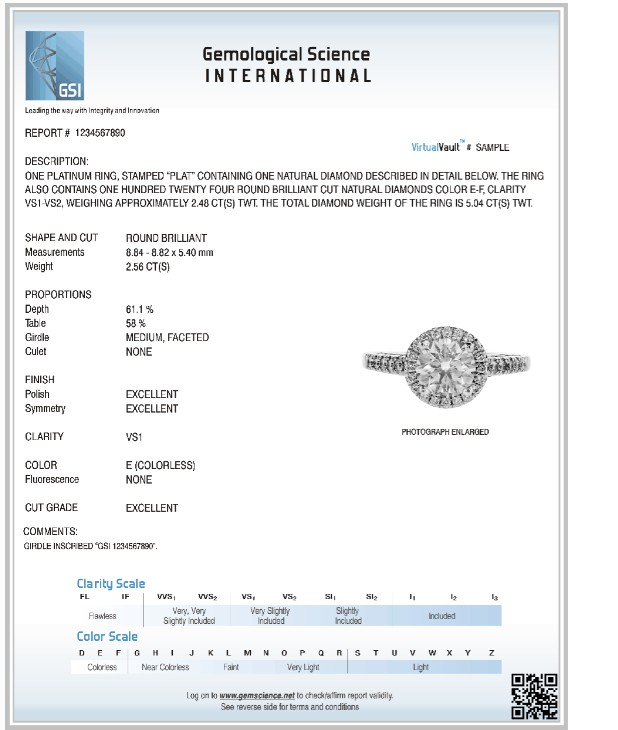
Before making a significant diamond, colored gemstone, pearl or other precious jewelry purchase, Azar counseled, “Consumers should ask for an independent gemological laboratory report from a reputable gemological laboratory and read carefully to ensure that the report is consistent with the seller’s description of the jewelry.” As Azar explained, “An independent laboratory report helps consumers understand exactly what they are purchasing. It provides an objective assessment of the identity and characteristics of a gemstone or piece of jewelry, including important disclosures about its origin, or any detectable treatments it may have previously undergone.” An independent laboratory report gives consumers a reliable point of reference beyond the retailer’s description or sales receipt, she observed, as it builds transparency into the purchase.
Insisting upon receiving an independent laboratory report before you purchase what is being sold as a natural diamond engagement ring can spare you from a few jewelry disasters. For starters, let’s say that you get a lab report after you’ve purchased what was sold as a natural diamond engagement ring. The independent gemological laboratory report provides proof that it is in fact a lab-grown diamond, which holds less resale value than a natural diamond, and not what you agreed to purchase.
Sample report from GSI
It’s also worth noting that having gem identification laboratory reports on loose gemstones, pearls or mounted jewelry can help individuals obtain proper insurance coverage for their jewels. As Azar described, “This information can be important when taking out insurance policies on valuable jewelry because an accurate factual description helps support an appropriate appraisal and insurance coverage. While a laboratory report is never an appraisal and never establishes monetary value,” she continued, “it does provide an independent technical record of the item being insured.” It follows, therefore, that consumers should ask their insurer whether a separate appraisal or other documentation is required. Buying from a reputable source and obtaining independent verification such as lab reports complement each other while serving the consumer, Azar concluded. “One provides confidence in who you are buying from, while the other confirms the exact nature of what you are buying.”
#2: Clean And Care for Your Fine Jewelry Like an Expert
Jewelry should be the last thing you put on in the morning (after perfumes, hairspray and lotions have dried) and the first thing you remove at night (before bathing, showering and sleep) to prevent tarnishing and potential structural damage.
Proper care is essential when storing gold jewelry (and all other jewels) to maintain optimal appearance and condition. According to Darrell King, CEO and President of custom and stock packaging firm Gunther Mele Co., “Surface discoloration occurs when the non-gold metals in gold react to oxygen, moisture, sweat, chlorine, and chemicals in beauty products. The degree to which tarnish manifests, King explains, “depends on the purity of the gold. 10-karat gold is the most susceptible, while 14-karat gold tarnishes at a moderate rate, and 18-karat gold tarnishes at a mild rate.”
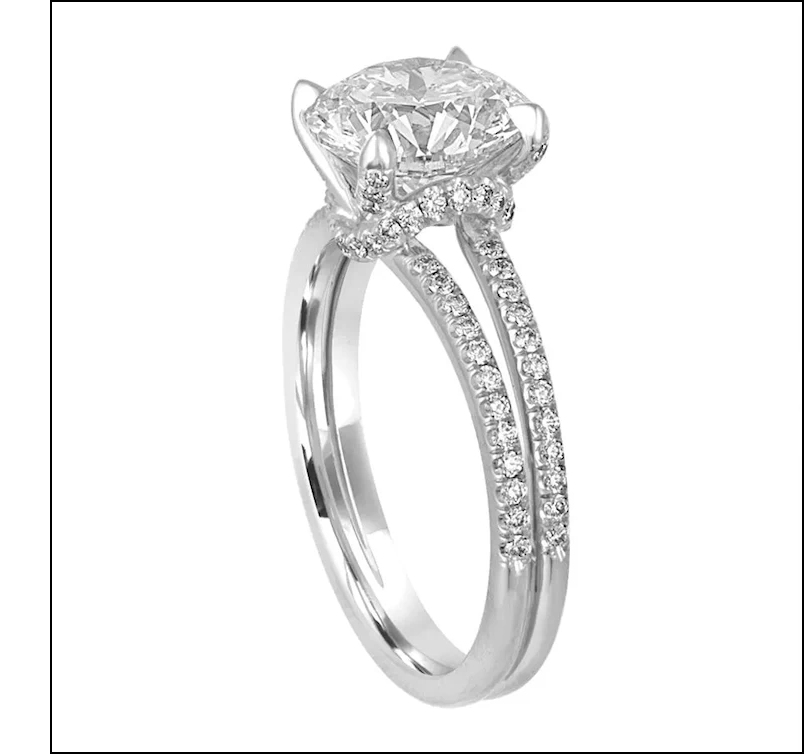
Goldstar Jewellery
According to Kristi Nicolosi, the owner of Columbus, Ohio-based Glister, Inc., which operates alongside The Kingswood Company as a provider of private-label and corporate-owned jewelry products, jewelry care is related to self-care. “Treating your jewelry right and cleaning it connects you to the memory and meaningfulness of the piece,” she said, “while giving you the satisfaction of creating a great before-and-after moment.” Nicolosi is also the founder of CLEAN+CARE®, which is a professional-grade brand of science-based jewelry cleaning products designed for safe at-home and retail use. As she related, “The key fact to know about jewelry care is that it is never one-size-fits-all. The right way to clean a piece is determined by its most delicate material, whether that’s a pearl, a treated gemstone, a plated finish or an antique setting. Knowing what you’re cleaning,” Nicolosi emphasized, “is key to learning how to clean it.”
According to Nicolosi, “What works best for all gold is a dedicated fine jewelry cleaning solution designed for gold and harder gemstones like diamonds to remove oils and grime, followed by a dual-care microfiber and tarnish removing polishing cloth to remove tarnish as needed. Either way,” she suggested, “skip the household products and use a purpose-built cleaner to take the guesswork out.” King added that all jewelry should be wiped down after removing it and before storage. “Use a soft microfiber cloth to remove accumulated body oils, sweat, and cosmetics,” he instructed. “To prevent unnecessary wear and scratches, store each item separately and avoid placing any jewel on hard surfaces.” Keeping jewelry out of direct sunlight, King added, is another way to guard jewelry from potential tarnishing.
How To Protect And Store Delicate Pieces
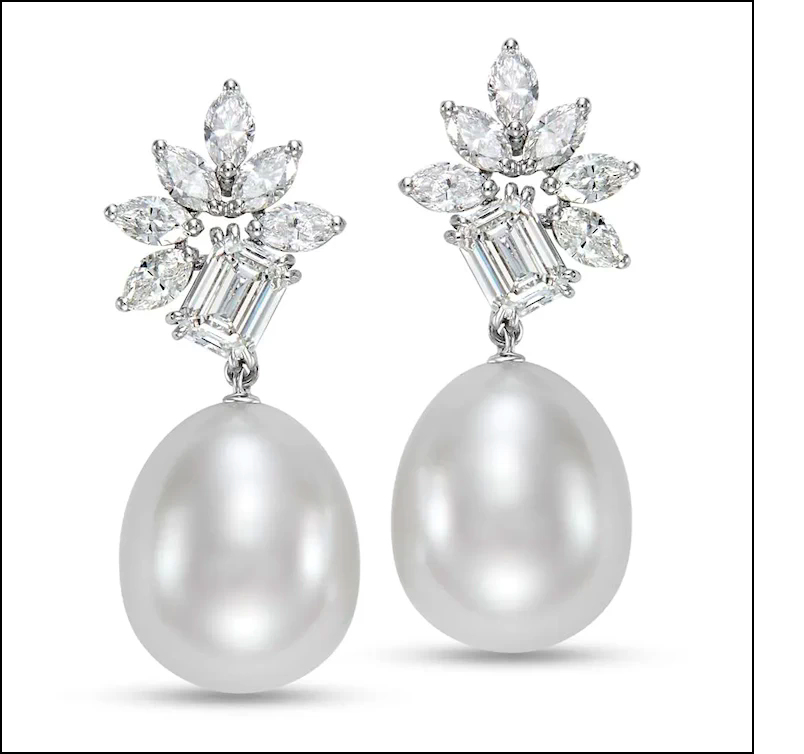
Mastoloni Pearls
Regarding the storage of organic gemstones such as pearls, coral and amber, King counseled against keeping any one of these substances in sealed plastic bags. “Doing this can cause drying, yellowing and surface cracking in these gems,” he warned. What’s more, “Pearl, jade and coral necklaces strung on silk or nylon should be stored lying flat, as gravity puts strain on the threading, causing the material to stretch and weaken over time,” King said.
Always store earrings separately to protect them from unnecessary damage. “For the optimal storage setup, use jewelry boxes that offer specific necklace and bracelet storage, which provide the best protection and organization These jewelry storage boxes will have built in necklace/bracelet hooks, closets and wells,” he advised.
Power Moves for Protecting Pearl Jewelry
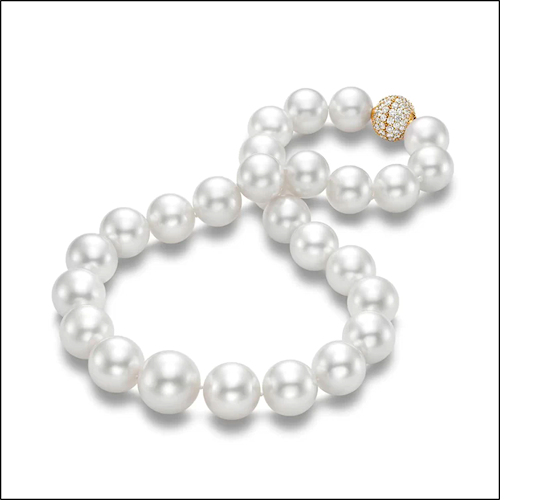
As Ray Mastoloni, co-owner of the New York-based, family-owned heritage company Mastoloni Pearls noted, “Pearls are created by a mollusk that builds up many layers of nacre over an irritant.” The pearl that forms naturally protects the mollusk from the irritant. “Pearls are very soft and will be damaged by any heavy impact, Mastoloni said. “They can crack, fracture, or chip. You should always consider the impact of the activity before choosing the pearl jewelry you wear during the day or to a nighttime event. Rings are the most vulnerable to a direct hit,” Mastoloni said. Thus, pearl rings should never be worn during athletic activities, gardening, housework or other high-contact situations.
Pearls are born in water, and they need moisture. They pick up moisture and oils from the skin which help keep them bright and lustrous. Mastoloni pointed out that people sometimes damage their pearls by safeguarding them inside a vault or safety deposit box. Never do this with your pearls, he related, for such arid environments “can dry the pearls out and make them become dull-looking and off color.” When storing pearls, keep them in the folder or pouch they came in. “You always want to keep pearls separated from diamonds and other jewelry,” Mastoloni instructed. “This is because pearls are soft and will scratch if they rub against other jewels.”
Pearls can be affected by chlorine, alcohol, and other chemicals over a long period of time. Pearls should always be the final item you put on so that perfume, hair spray and other cosmetics never directly touch these gems from the sea. Hand creams and body lotions may or may not harm pearls. “It depends on what’s in the specific product,” Mastoloni ventured.
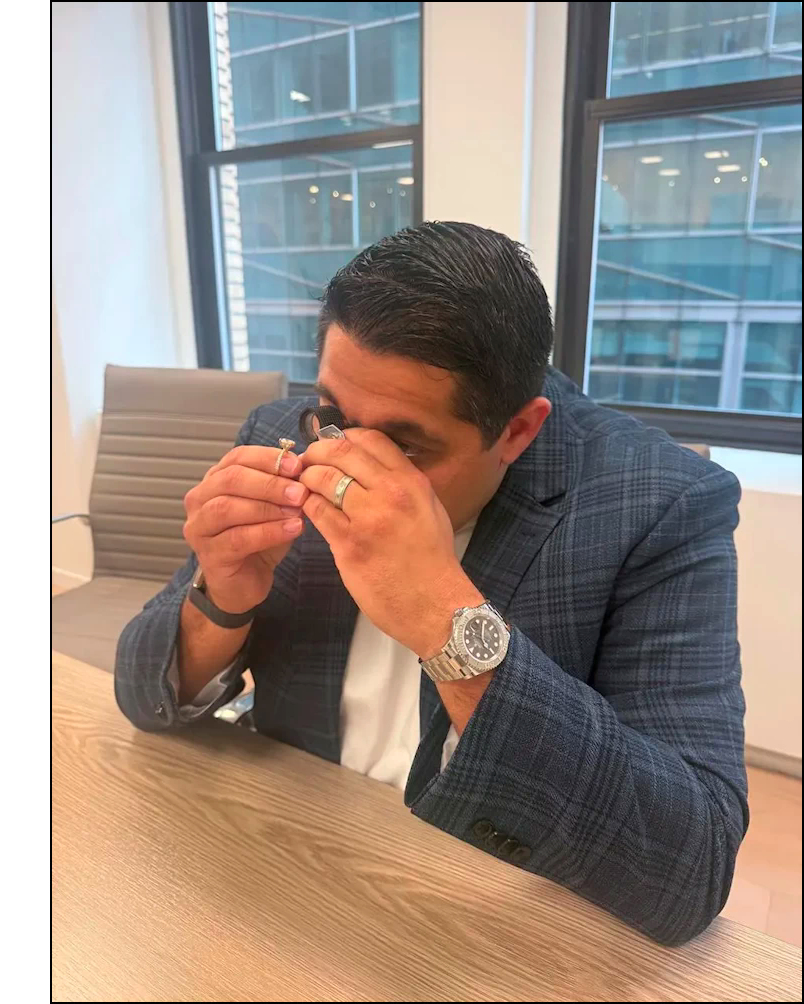
Goldstar Jewellery LLC president, Steven Lerche, who is also president of The Plumb Club.
While jewelry lives on the body, it also holds the potential to live many more lifetimes on future generations only if it is well cared for and protected from potential disasters.
Denise Richards, a principal of the heritage firm Underwood Jewelers in Jacksonville, Florida, said this is especially true of rings. “I advise customers who have bought prong-set diamond or colored gemstone rings to have their prongs checked under our microscope every six months. Reputable jewelers do this for free,” she said, “and they do it happily to protect customers’ jewels and provide peace of mind.”
Richards, a certified gem appraiser (CGA) and Secretary of the American Gem Society (AGS) International Board of Directors for 2026-2027, said the same recommendation applies to clasps. These should also be checked on a regular basis to prevent inadvertent loss of the jewel.