



Tech Innovations
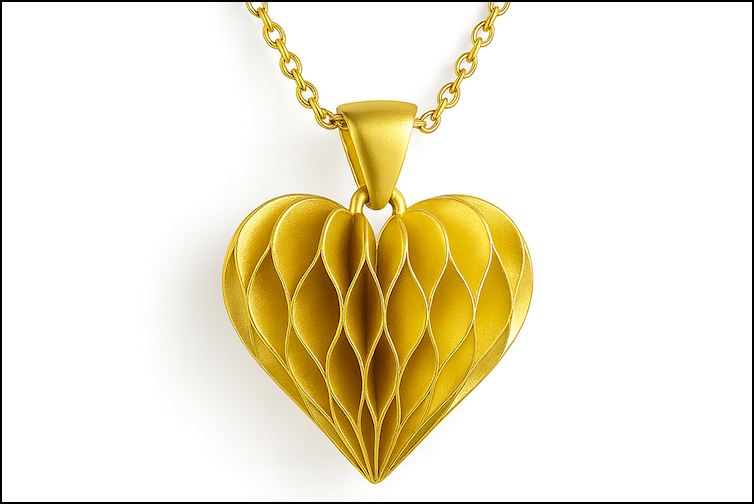
Technological advances in fine jewelry manufacturing move at a dizzying rate. The advent of artificial intelligence (AI), 3D printing and scanning, and CNC and lasers have streamlined some areas of marketing and production that have given many in the industry a boost.
The simplest type of tech aide may be point-of-sale software for data analytics. This is a help to Adam Bassalali, cofounder and vice president of Lali Jewels, for trunk show scheduling and selections and to eliminate manual data analysis.
“We’re diving deeper into tech to better review our best sellers and make reorder suggestions,” he says.
Considering the ongoing tariff situation for U.S. importers, manufacturing practices such as 3D castable resin “has become a game changer,” explains Valerie Fletcher, vice president of design and product development, ODI / Original Designs. “CNC and laser technology are becoming faster and more efficient, with the ability to create crisp, precise, repeating patterns like sunbursts, waves, and geometric designs. It’s a great way to add luxury detailing at minimal cost. I can still create the CAD with my design team in India but have the resin grown on a 3D printer here in New York so it’s ready for local casting.”
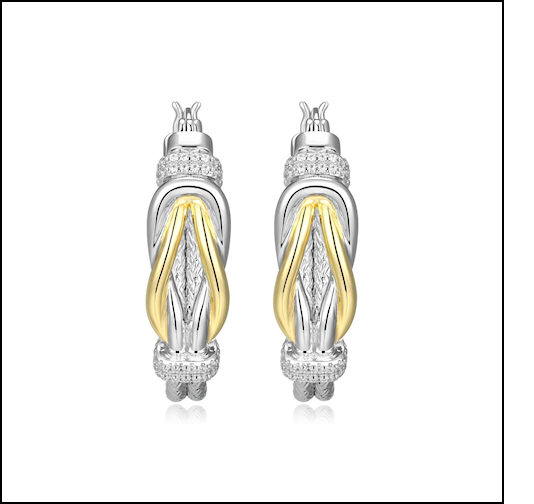
Prime Art & Jewel
Another benefit to castable resin? “It preserves the most intricate details that would be softened or deformed using a rubber mold,” adds Fletcher.
Others note the importance of 3D scanning. Matthew Behnam, president of Everspark, sister company to Samuel B., offers this scenario to explain its importance: a customer has a ring and wants another to fit snug against the original.
“Certain scanners we use to do that,” he says. “They’ve come a long way in the last couple of months, with the detail and ease of scanning.”
For AI, opportunities are huge. AI can help users parse options for collections, which is one of the ways that Behnam uses it.
“From a design perspective, you can have designers sketch ideas for new concepts and submit the sketches into AI image generators,” says Behnam. “Within seconds or minutes, AI provides you with many different iterations or angles on that idea. AI figures out what else you can do and is prompt based, as in, ‘We want to make this pendant and see what it looks like if it’s melting.’ AI does it right away. It’s not a replacement for a human design but enhances and speeds up product development.”
Behnam’s AI tools of choice include Google Gemini and Picasso AI, both of which are image-based AI tools.
Behnam’s real pride and joy? The custom jewelry manufacturing platform he’s building for retail clients to use. Many stores still aren’t sold on custom because they lack the time and tools to bring jobs to life, but Behnam’s efforts give them a dedicated interface for ordering.
“It’s too hard to send multiple emails and confirm every aspect of a job—is this a 2 mm ring or not?” he says. “It’s too overwhelming for a lot of people, which is why we built a platform to improve the process.”
Custom work means communicating a concept through images and storytelling. Behnam has streamlined the process by allowing clients to upload images and tell the story of designs with an assist from AI.
“It reads what the client is typing and suggests, ‘Here’s how I think you should modify the design,’ or ‘Is this what you really meant?’” he adds. “We CAD it, price it in different metals, and provide a 3D rendering so retailers don’t need to quote manually on the phone. Stores just approve it and track the manufacturing process until it’s delivered. The overarching concept behind it is to provide full transparency for stores and stop mistakes from happening. As opposed to solely dealing with phone calls, the platform allows stores to have more bandwidth. Did I order right color? It’s all right there on the dashboard.”
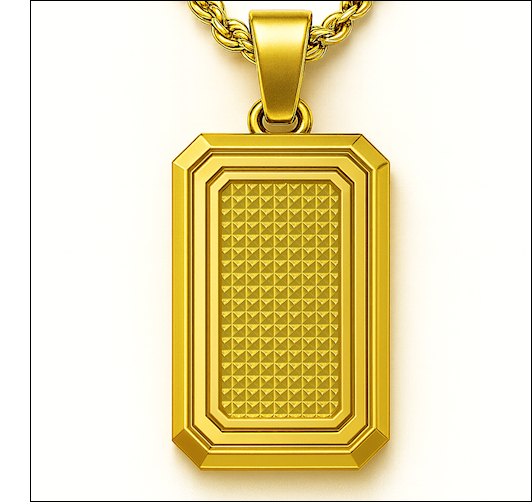
ODI / Original Designs
Another way to use Behnam’s platform is for private label manufacturers to request assistance with retail pricing. Should you mark up 2.5 or just 2?
“We are using an AI comparative shopper to scour the web for like items, such as a 1.0 ct. diamond channel-set band, to see how others price pieces,” he continues. “We have these running all the time; once a day AI searches the entire internet for prices—we’ve turned AI into an employee to do a very specific task. It’s the framework of Chat GPT that is called an agent, and we tend to use agents a lot.”
For merchants who want a little tech in the shop, Fletcher suggests they purchase a laser engraver.
“Even an entry level one lets you quickly personalize a piece for your customer, adding value to the sale,” she says.
But if you’re a retailer with strong manufacturing partners, “you don’t need to be investing in this stuff,” says Behnam. “If Everspark manufactures for you, you will need a wax and you will have one the next day.”