





More for Men
The momentum of men’s jewelry shows no signs of slowing down! In fact, in the 2025 INSTORE Design Awards, the men’s jewelry category saw the greatest growth. Manufacturers aren’t surprised, with many continually upping the stakes on bold design.
New looks are weighty and robust—items that would fit Arnold (“I’ll be back”).
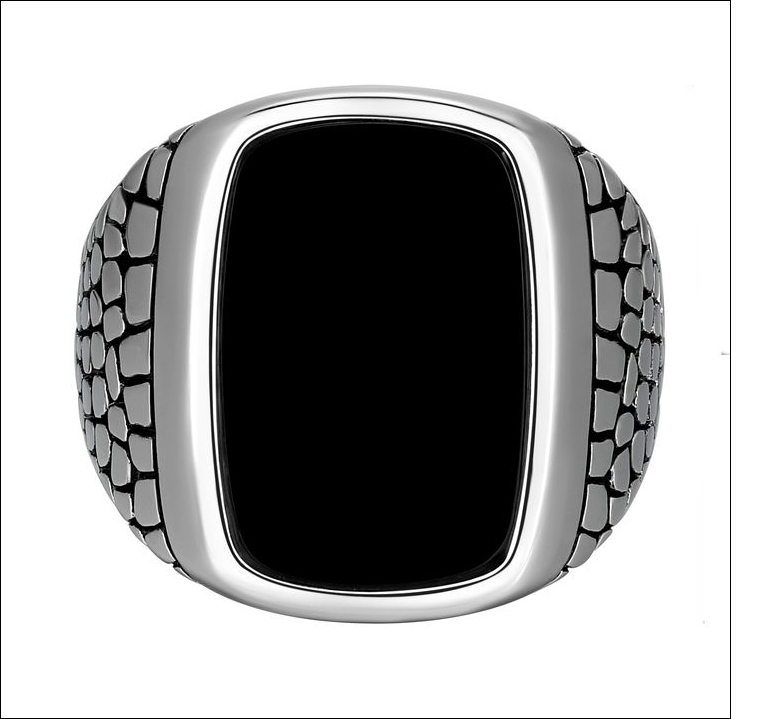
Prime Art & Jewel
“We expanded our best-selling Chisel Collection to an excellent reception and reorder rate,” reveals Susie Wilty, director of sales, Paris 1901, a division of Prime Art & Jewel. “A close second is our Gator Collection with similar styling. Both are masculine with a rugged elegance and understated appeal.”
Jeff Levitt, vice president of merchandise for Cynergy Trading, also got the manly memo, with a side of sparkle. His firm is making low-profile rings with lab-grown diamonds up to 2.0 carats total weight.
“We are targeting urban male professionals,” notes Levitt. “It’s an underrepresented market.”
Cirari and Color Jewels (the latter is a private label division) don’t make a lot of men’s jewelry, but the styles they do make more often feature lab-grown diamonds, just like at Cynergy Trading.
“Lab-grown diamonds are a big piece of our business, and men’s jewelry has grown to 2% of our industry,” says Mark Funk, vice president of sales and marketing.
Other new collections are also an extension—and expansion—of brands’ current DNA. That is the case for Triton, a division of Frederick Goldman, which recently unveiled a Men’s Fashion Jewelry line. Many may recognize Triton from the company’s bridal division, and now bracelets, necklaces, pendants, and fashion-inspired rings join the lineup.
“Some of the motifs are unmistakably Triton—shields that symbolize strength and compasses that represent direction,” explains Bryan Cowan, senior vice president of customer success and business development. “Others are new, like feathers and wings that convey freedom, and bold geometric forms that deliver modern masculinity. Each design ties back to our brand codes of confidence, individuality, and innovation. This expansion gives our retail partners a complete jewelry wardrobe for men, one that balances everyday essentials with bold statements that are engineered for versatility.”
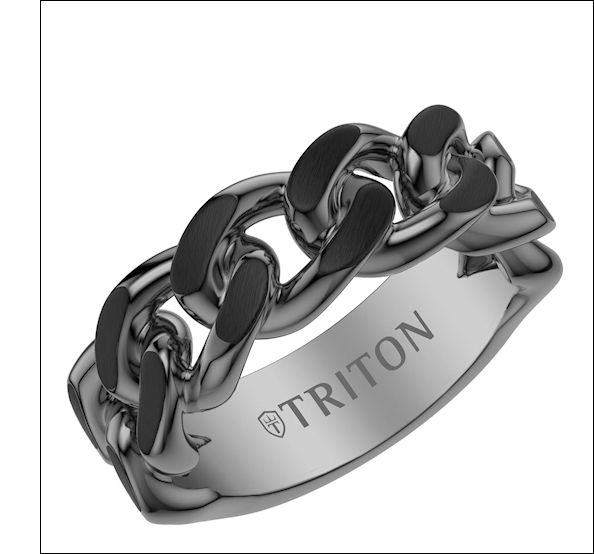
Frederick Goldman Inc.
When it comes to finishes and materials, many may seem familiar simply because if looks are still working, who’s going to change them? Very few. To wit, rhodium, black PVD, ruthenium, blackened silver, and gunmetal finishes are inherently masculine and remain popular, and matte surfaces still appeal to understated tastes. Yellow gold remains hot for women and men because it immediately speaks to the lux nature of the precious metal—which just hit $4,000 an ounce at press time! Meanwhile, sterling silver, titanium, and a host of other alternative metals also frequently make up men’s collections.
In gemstones, natural or mined options like tiger’s eye and sapphire are go-to choices, as are black onyx, lapis, and lab-grown diamonds. Ceramic accents also have appeal. Every pairing is poised to make a bold statement.
One more look that ebbs and flows in the market? Coin jewelry.
“We see it trending in men’s jewelry,” explains Matthew Behnam, president of Everspark, a sister company to Samuel B. “We just had another call about it.”
More classic looks come from Marathon, a maker of a Cape Cod-style bracelets in silver with a thick rounded Rolo chain and center bead. Other chain styles include figaro and Cuban, with accessible price points in 14k gold fill.
“It’s a good option considering the price of gold,” notes Barbara Barry, salesperson.
No matter a man’s reason for wearing jewelry—be it cultural, religious, or pure self-expression—having an assortment is key to making sales.
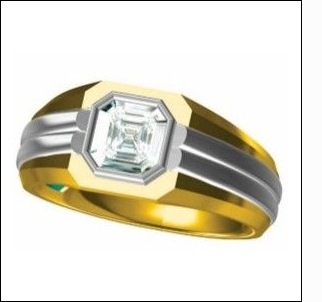
Cynergy Trading
“We really love to help curate that for those who want to jump into a largely untapped market,” says Wilty.
To further prepare, she offers merchants the following sales tips: Ask questions about everyday style, activity level, and what the gent currently wears. Then drive home the heirloom-status equation, followed by the personal connection to the giver. “They will think of you every time they look at it,” she adds.
“Always personalize a sale,” she continues. “The more you know about the consumer, the more ways there are to accomplish this.”