


Diamonds at a Crossroads
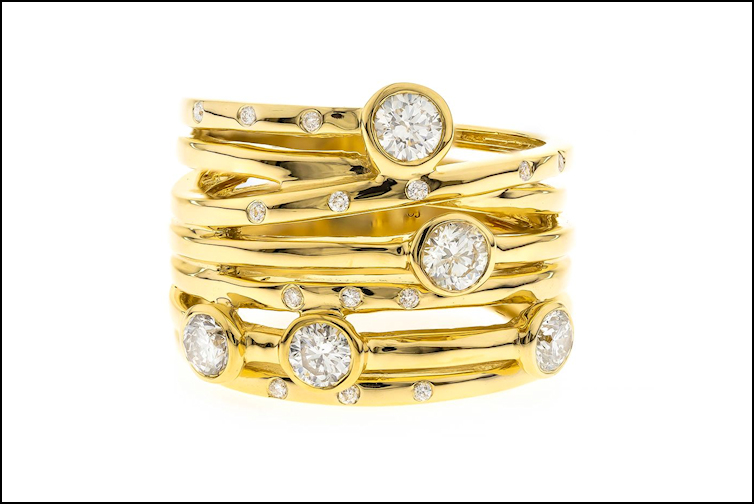
While America’s love of diamonds still outshines all other categories of fine jewelry, the U.S. diamond market in 2025 had another rough year—and that’s on top of a challenging 2024!
In November 2024, Analyst Paul Zimnisky told The Financial Times, “A generic lab-grown diamond can be bought for as little as one-twentieth the price of an equivalent natural diamond.” By spring 2025, he doubled down on his lab-grown diamond observations, telling JCK that prices were down 90% to 95% compared with prices in 2015, and that within five years “a ton of lab diamonds would sell on Amazon and Alibaba. The industry will gravitate back to natural.”
Amish Shah, founder of ALTR, a lab-grown diamond manufacturer, sees the price fluctuation as well, calling the wholesale pricing of earth-mined and lab-grown diamonds for the past 24 months “a roller coaster.” Still, he’s not worried about the future of his products.
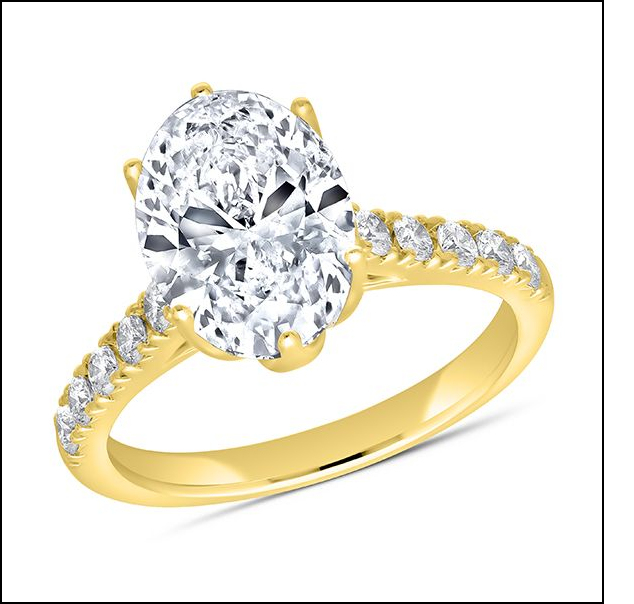
ODI / Original Designs
“Lab-grown diamond prices are a direct translation of the marketplace, which is demand and supply in today’s free trade world. Lab-grown prices under one carat are stable and under a half carat are currently higher than they were last year. Lab-grown prices between 1.0 ct. to 3.0 cts. are stable. Lab-grown diamond studs are running way over last year, almost doubling up over last year—the number of units has gone up. Plus, 80% of bridal center stones set in earth-mined diamond semi-mounts or lab-grown diamond semi-mounts are lab-grown diamonds.”
And their natural counterparts? It’s complicated.
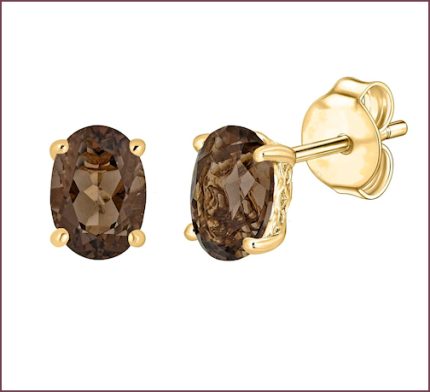
At the JCK Las Vegas Show last June, De Beers unveiled its Ombré Desert Diamonds initiative to cast a spotlight on natural-colored diamonds in tones of warm white to champagne, brown, and amber. De Beers is supporting this promotion with marketing budget. This effort may distract consumers from the issues surrounding white diamonds, which are the ones with wildly fluctuating prices, and pave the way for greater sales of an oft-disregarded segment of diamonds—the nonwhite and included ones.
Everyone can see that white diamonds are still taking a beating. According to Shah, in the last 24 months at the wholesale level, the [natural] SI-quality diamonds “have seen a drop of 25% to 35% in pricing. In earth-mined smaller goods (one carat) with reports, prices are close to 50% off.”
Mark Funk, vice president of sales and marketing, Cirari, sees this reality as well.
“What’s happening is there’s more and less expensive SI1 to VS2 goods coming in the market at a very low price, which devalues the stuff that might be SI2 to I1 products,” he explains.
Valerie Fletcher, vice president of design and product development at ODI / Original Designs, calls this current scenario a “price crash” brought about by lab-growns.
“They pulled down the perceived value of diamonds in general, contributing to weaker demand,” she says.
This fallout and resulting “value confidence” problem, as she calls it, could be one of the biggest issues for jewelers in 2026. Add that to tariffs and the price of gold, and there’s a minefield for merchants to navigate next year.
“We’re constantly repricing due to diamond and precious metal prices and tariffs,” confirms Fletcher.
Funk, too, has had his share of repricing events—about four in 2025. But the questions that consumers have about diamond jewelry pricing all relate to the price of gold, not the diamonds. And while his company’s sales were slower in August and September 2025 than the previous year, October was phenomenal and November was strong.
Leo Schachter Diamonds has weathered many a turbulent selling season, but Lenny Kramer, executive vice president of sales, sees a light on the horizon for this one.
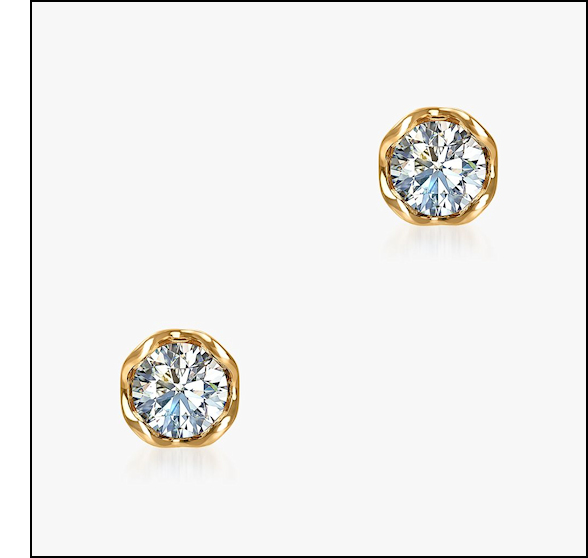
ALTR
“Now [natural diamond] supply is restricted in better goods, so prices are starting to firm up,” he explains. “We’re waiting to see how the consumer acts during the holiday season. A lot rides on it. But we don’t believe in museum pieces—we’ll reprice and sell appropriately as the market dictates.”
Some insiders suspect that early lab-grown diamond jewelry costs and subsequent markups are coming back to bite retailers. Anecdotes shared in jewelry industry Facebook groups confirm that some consumers with lab-grown diamond engagement rings from broken betrothals were devastated to hear their buy-back offers—if any at all.
Issues aside, everyone can agree that lab-growns aren’t going anywhere, and the market for naturals won’t dry up anytime soon.
“The biggest diamond trend for 2026 is more lab, more lab, and more lab,” Funk says confidently. “I think in the naturals, it’s going to come back only for unique pieces.”