2026 Product Directions
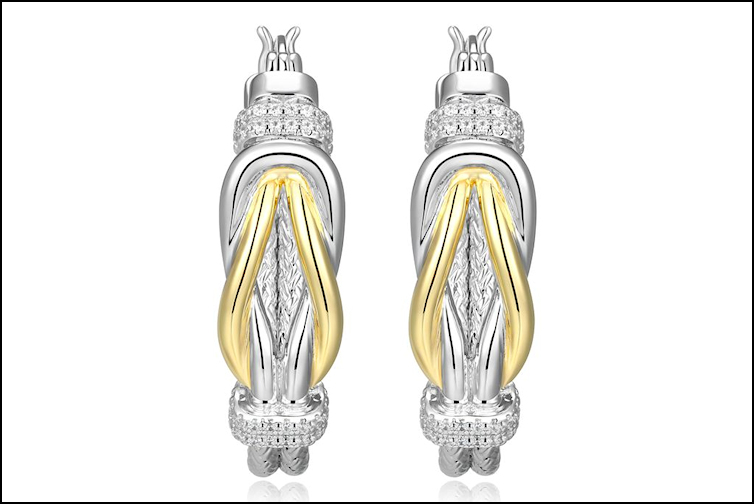 Just when you think the price of gold can’t possibly climb higher, it does, and manufacturers feel the pinch! The price of gold—at press time, it was over $4,600 an ounce—is currently the biggest issue in the jewelry market, followed by tariffs and diamonds—lab and mined.
Product directions for 2026 are a direct reflection of these market factors.
For example, the disruption and price fluctuation in the white diamond market has driven some consumers to better appreciate colored ones. DeBeers’ latest Desert Diamonds campaign casts a spotlight on natural brown diamonds, the timing of which dovetails with the 2025 PANTONE Color of the Year, Mocha Mousse.
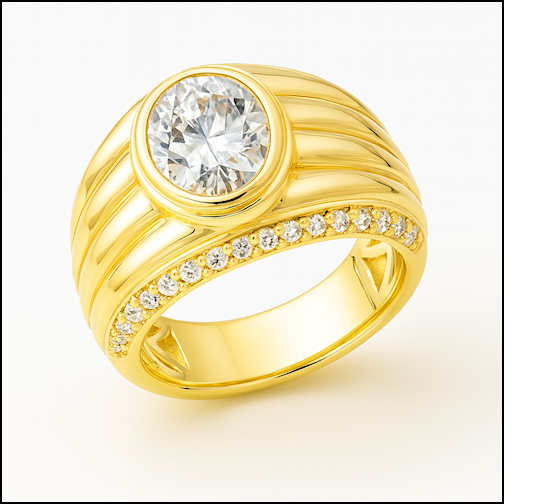
ODI / Original Designs
A recent article in the Wall Street Journal suggests another trend among consumers who wear brown diamonds: they’re showcasing their taste in naturally occurring gemstones as opposed to white or colorless diamonds, which can be lab or natural. When diamonds are brown, they’re natural; nobody is growing brown diamonds.
“It’s more fashion oriented, and a popular color, confirms Adam Bassalali, co-founder, vice president, Lali Jewels, who has only ever sold natural diamonds, never lab.
Another ongoing trend in diamonds, lab grown and mined? Fancy silhouettes, including antique-type diamond cuts inspired by Taylor Swift’s engagement ring, according to Russell Schachter, executive vice president of sales and new business development for Indigo Jewelry. The pop star’s 8.0–10.0 ct. elongated antique cushion-cut diamond set in yellow gold inspired a rush for the cut, which had already been trending in the trade in diamonds and colored gemstones, for upwards of eight years
When it comes to gold prices, lighter-weight pieces, vermeil, and silver designs are all options for manufacturers to make.
“With the price of gold on the rise, we are working to reduce our gold weights where possible,” explains Jessica Zerega, merchandising director, Goldstar Jewellery. “We are working to keep our gold weights down but keeping the perceived value of the styles still really high, with larger lab grown diamonds and unique design elements.”
Valerie Fletcher’s clients are relying heavily on vermeil because of the price of gold. The plating on their designs is 2.5 microns—“Thick enough to withstand everyday wear, and because the base is silver, it is 100% precious metal,” explains the vice president of design and product development for ODI /Original Designs.
“And vermeil plating can be done on any type of product, so you will never lose a sale due to the price of gold,” she continues. Combined with lab-grown diamonds, we can offer a luxury look at an affordable price.”
Zerega knows how important the category of gold is to clients, but current prices are driving them into “a bit more sterling silver and plated merchandise,” she reveals.
Paris 1901, a division of Prime Art & Jewel, is well equipped to provide silver jewelry, calling itself one of the leading sterling silver manufacturers in the world,” according to Susie Wilty, director of sales.
“The versatility of sterling silver plays in our favor, too, as 14k gold plating gives the customer the option of that look without the heavy price tag,” she adds.
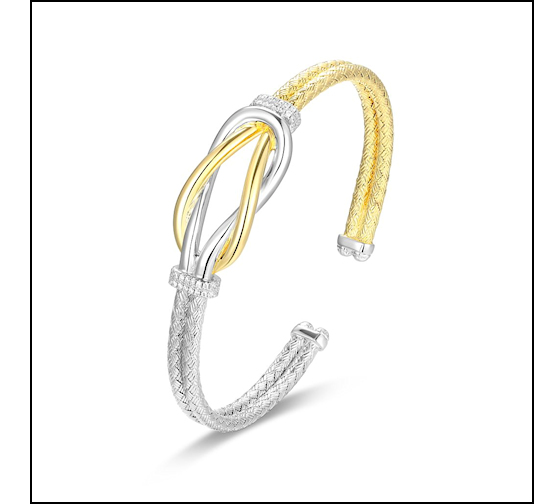
Prime Art & Jewel
Among her predictions for 2026? Sterling silver will be important to new design directions, from sleek minimalist pieces to vintage-inspired ones to personalization and more.
“Consumers are moving toward more personal, expressive jewelry (customization, layering, mixed materials) and silver works well for that,” she observes. “Younger buyers in particular lean toward pieces they can afford but still feel special or designer driven. By 2026, sterling silver should again be well-embedded in the fashion vocabulary.”