








Leveraging Jewelry Categories Poised for Growth

For retail jewelers looking to leverage the next phase of consumer demand, colored gemstones and pearls are no longer secondary. They are becoming central to how consumers define personal style, celebrate milestones, and communicate meaning through jewelry.
In The Plumb Club’s most recent consumer research, there was a clear shift in buying behavior that retailers should pay close attention to. The study found that spending on non-bridal jewelry has increased 28% since 2023, signaling the growing consumer appetite for self-purchase and fashion-oriented jewelry beyond the traditional diamond bridal pieces.
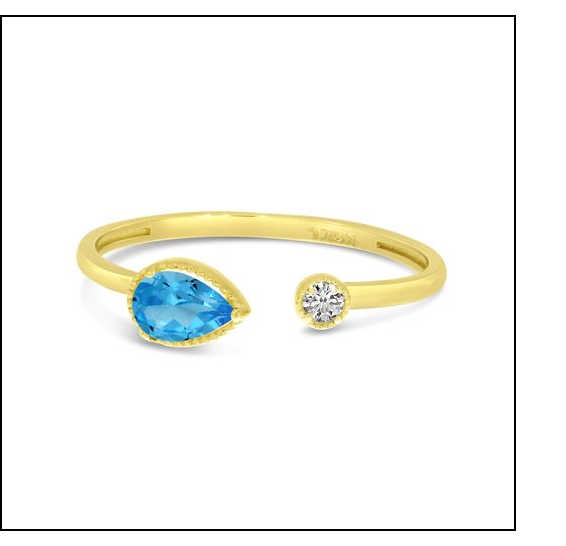 That trend plays directly into the strengths of colored gemstones and pearls. Consumers are increasingly seeking jewelry that reflects individuality. Nearly 70% of survey respondents said personalization matters when selecting jewelry and 64% expressed interest in pieces with symbolic meaning.
Allison Peck, brand director of Brevani, supports these findings, noting, “We’ve been seeing a big increase for fashion forward jewelry, specifically colored gemstone styles. Consumers want to stand out from the crowd and express themselves by adding color into their daily look in a subtle, but meaningful way. They want things that bring them joy, while showcasing their uniqueness without too much extra effort.”
Consumers today increasingly view jewelry as an extension of personality rather than simply a status symbol. Colored gemstones naturally support this shift because every gem carries emotional associations, symbolism, and visual individuality.
The Plumb Club research found that 65% of consumers actively seek birthstone jewelry designs, and brightly colored gemstones took an upward leap of 7% compared to the previous study. The study also underscored that 67% of consumers want jewelry that expresses their personality, and 78% believe that colorful jewelry lifts their mood.
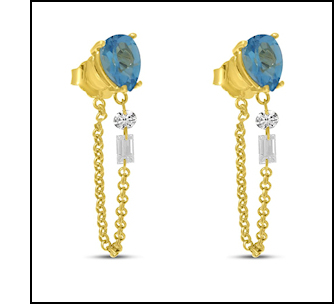 For retailers this represents a potential uptick in sales and an enormous storytelling opportunity. A sapphire is more than a blue gemstone – it’s the birthstone for September and can symbolize loyalty, and wisdom. Emeralds celebrate individuality through their natural “Jardin” inclusions – the beauty of the imperfect. Rubies communicate passion and strength. Morganite offers a softer, romantic alternative for consumers seeking something distinct from traditional bridal looks. These emotional narratives transform the selling platform into a presentation of a product that makes a personal statement.
Sales associates can connect gemstones to milestones, personality traits, birth months, anniversaries, historic origins, or symbolism to create deeper emotional engagement. Emotional connection often drives higher conversion rates and customer loyalty, helping to ensure future sales.
The bridal category is also ripe for this category growth. One of the strongest indicators of the acceleration of this trend is the growing number of celebrities using colored gemstones for their engagement rings and increasing desire among the general public for colored stone engagement rings. Social media and changing preferences are feeding the desire for engagement rings that feel unique and personal. Colored gemstones allow couples to create rings with individuality and meaning. While diamonds remain dominant, alternative center stones are steadily moving from niche to mainstream. Data from The Knot 2024 Jewelry and Engagement Study indicated that 17% of consumers are opting for engagement rings with colored gemstones.
Retailers who merchandise colored gemstone bridal collections alongside traditional engagement rings can position themselves to capture this growing segment. Offering customizable options and educational consultations further enhance the opportunity in store.
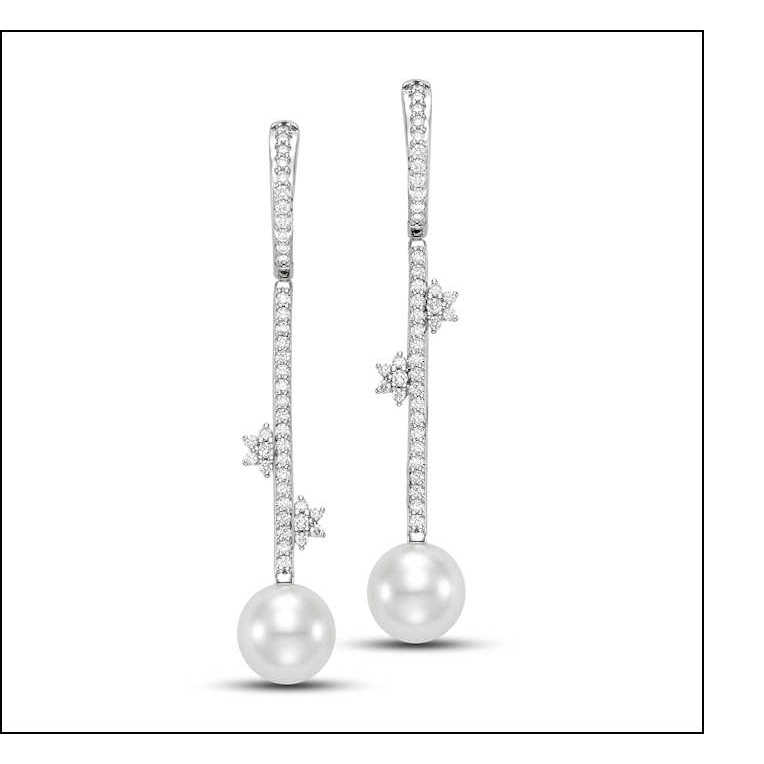
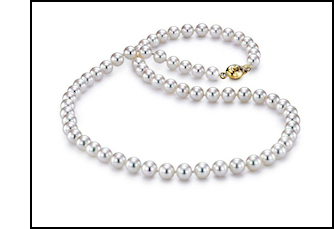
Pearls are also experiencing a notable uptick in popularity, particularly among younger consumers who are reimagining the category with modern styling and layered looks. While The Plumb Club research showed that white pearls remain the most popular choice, the interest in colored pearls continues to grow. While layered looks are fueling the desire for classic strands, younger consumers are embracing modern pearl designs and unconventional styling. Importantly, 81% of consumers said they would purchase pearl jewelry as a gift. That statistic alone highlights the pearl’s continued emotional relevance across generations.
“Today’s pearl customer is not just limited to classic studs and traditional strands,” says Ray Mastoloni, partner at Mastoloni Pearls. “Baroque pearls, mixed-pearl designs, natural color Tahitian and freshwater pearls, as well as multi-layer pearl designs, are attracting the fashion-conscious consumer who appreciates pearls for their organic beauty and individuality.”
Pearls also offer powerful storytelling opportunities. Unlike other gemstones, pearls are formed inside a living mollusk. Saltwater and freshwater each have their own distinct luster, and different mollusks create different types of pearls. Their formation process naturally lends itself to a narrative about patience, resilience, and beauty emerging over time, not to mention the historical importance of pearls. These stories resonate strongly with consumers seeking meaning-driven purchases.
Retail jewelers are uniquely suited to capitalize on the rise of colored gemstones and pearls because these categories thrive on education, curation and personal relationships. Unlike diamonds that follow a prescribed presentation on 4C categories, colored gemstones and pearls often require conversation and discovery. Customers yearn for guidance on the meanings, rarity, color variations, origin stories and styling possibilities of these two essential categories. The consultative selling environment plays directly into the strength of the jewelry retailer.
 Retailers who embrace storytelling, customization and personalization can differentiate themselves in ways that other distribution channels cannot.
The growth trajectory for colored gemstones and pearls is strong because it aligns with broader consumer priorities of self-expression, individuality, emotional meaning, and personalization. Consumers are increasingly purchasing jewelry to celebrate themselves, tell their stories and express identity. It’s no longer merely a mark of traditional milestones. For jewelry retailers that shift creates opportunity.
Retailers who expand colored gemstone assortments, modernize pearl presentations, train staff on storytelling, and embrace personalization strategies will be well positioned to benefit from one of the industry’s most promising growth categories over the coming years.